The Growth Systems Journal
Get one practical operations insight every week
Short, useful, and grounded in real fractional COO engagements. No fluff. Unsubscribe anytime.
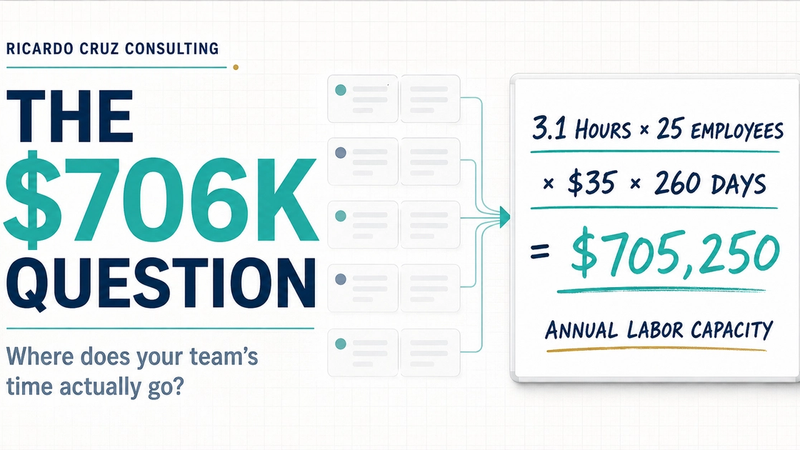
The $706,000 Question: Where Does Your Team’s Time Actually Go?
Administrative work rarely looks expensive in isolation. Across a 25-person team, 3.1 hours per employee per day would represent approximately $706,000 in annual labor capacity. Here is how to calculate your real number and identify which workflows to fix first.
Read article →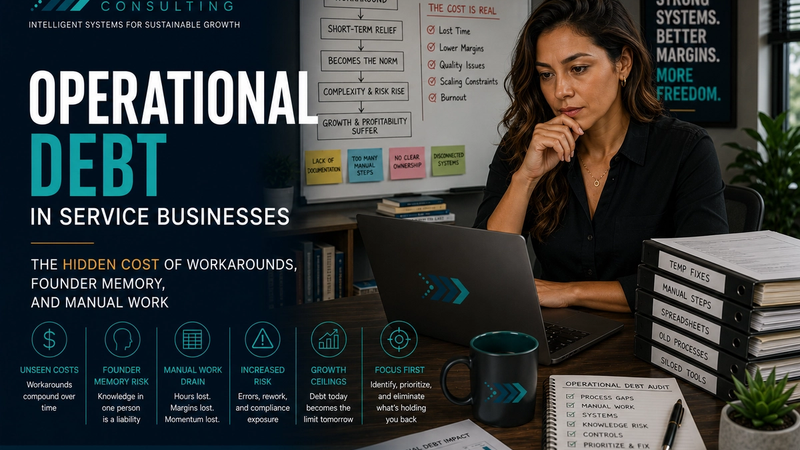
Operational Debt in Service Businesses: The Hidden Cost of Workarounds, Founder Memory, and Manual Work
Operational debt is the accumulated cost and risk created by temporary workarounds, undocumented decisions, manual coordination, and disconnected systems. Learn how to identify, prioritize, and reduce it without disrupting client delivery.
Read article →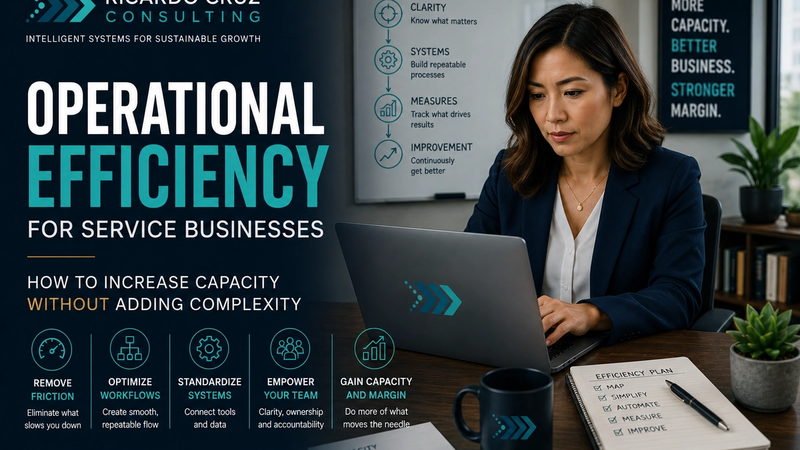
Operational Efficiency for Service Businesses: How to Increase Capacity Without Adding Complexity
Operational efficiency is not about pushing people harder or cutting costs blindly. Learn how service businesses can reduce friction, improve flow, recover capacity, and strengthen margins without adding unnecessary complexity.
Read article →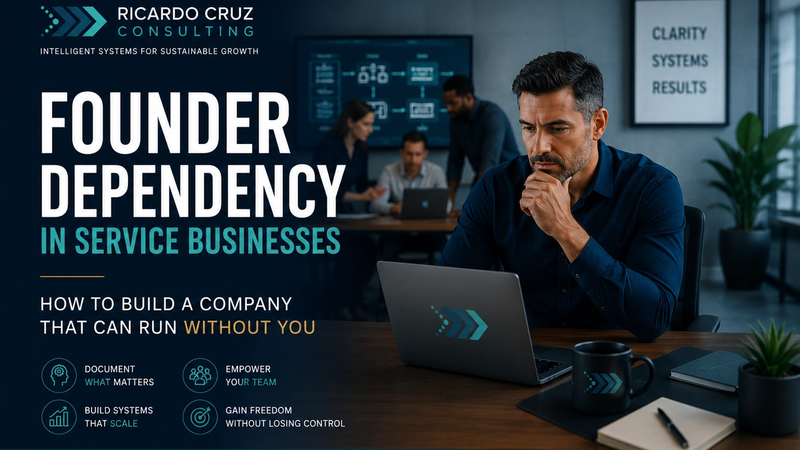
Founder Dependency in Service Businesses: How to Build a Company That Can Run Without You
Founder dependency occurs when a business cannot make decisions, serve clients, or move work forward without the founder's direct involvement. Learn how to transfer knowledge, authority, and ownership so the company can operate without becoming impersonal or overbuilt.
Read article →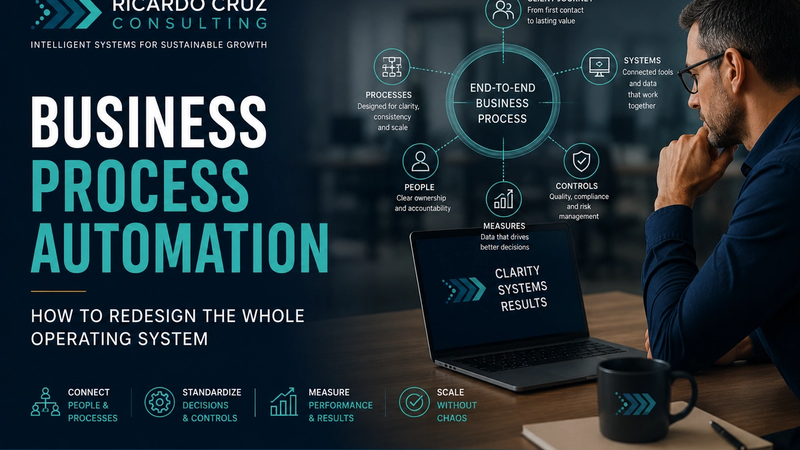
Business Process Automation for Service Businesses: How to Redesign the Whole Operating System
Business process automation connects workflows, decisions, systems, controls, and ownership into one end-to-end operating process. Learn how to redesign the whole system before automating it.
Read article →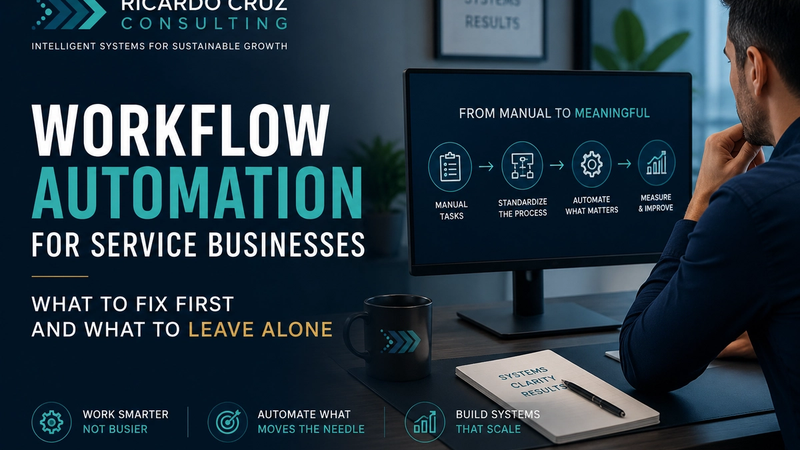
Workflow Automation for Service Businesses: What to Fix First and What to Leave Alone
Workflow automation should remove friction, not hide a broken process. Learn how founder-led service businesses can identify the right workflow, redesign it, and automate it without creating more operational debt.
Read article →
What Happens When Your Best Person Calls in Sick
A two-week absence exposed a hidden operational risk: too much business knowledge lived in one person’s head. This article breaks down the real cost of tribal knowledge, why new hires lose hundreds of hours reconstructing undocumented processes, and how founder-led businesses can protect growth by documenting the few workflows that matter most.
Read article →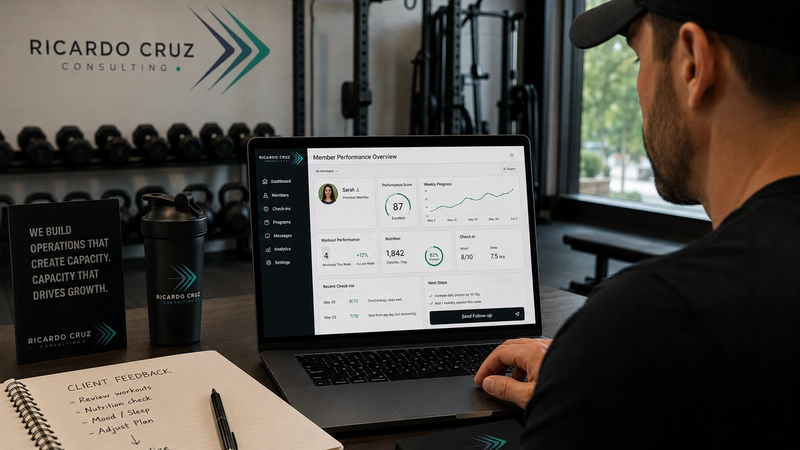
Why a Full Calendar Didn't Mean Full Capacity
An athletic performance center owner had full books, premium clients, and healthy revenue, but his growth was trapped inside 10 hours a week of manual client follow-up. Here’s how one connected dashboard helped recover 40 hours a month and unlock $72,000 in annual training capacity without sacrificing the personal touch clients expected.
Read article →
The difference between a busy team and an effective one
Your team works hard, but progress still feels slow. Discover the operational systems that turn busy teams into effective, scalable organizations.
Read article →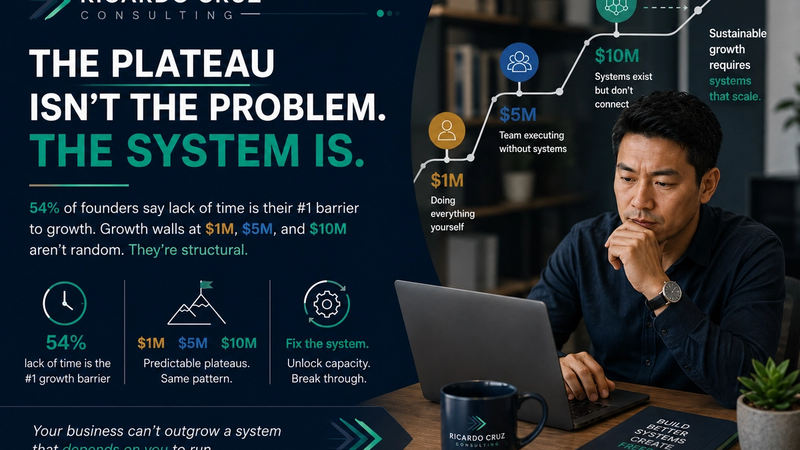
How to Break Through a Small Business Growth Plateau Without Hiring
Learn why revenue plateaus are usually caused by operational capacity, not market demand, and how scalable systems help founder-led businesses grow beyond their next ceiling.
Read article →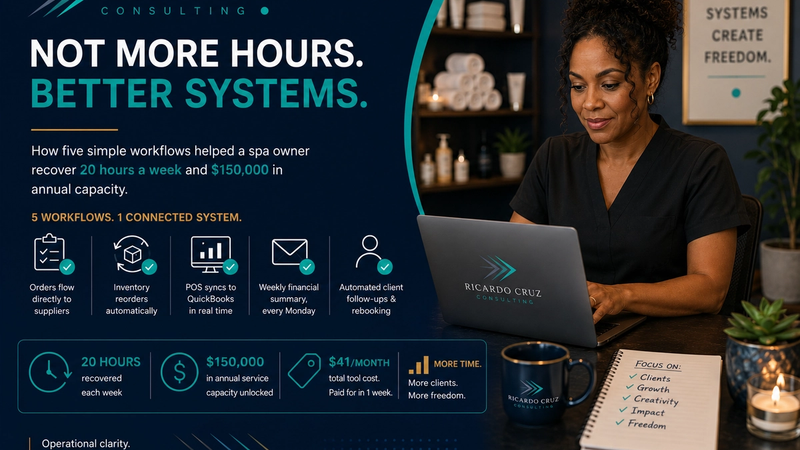
How a Founder-Operated Spa Recovered 20 Hours a Week
A successful spa owner was spending more than 20 hours each week on manual administrative work instead of serving clients. Learn how five connected workflows eliminated repetitive tasks, unlocked $150,000 in annual service capacity, and gave the founder her evenings back without hiring additional staff.
Read article →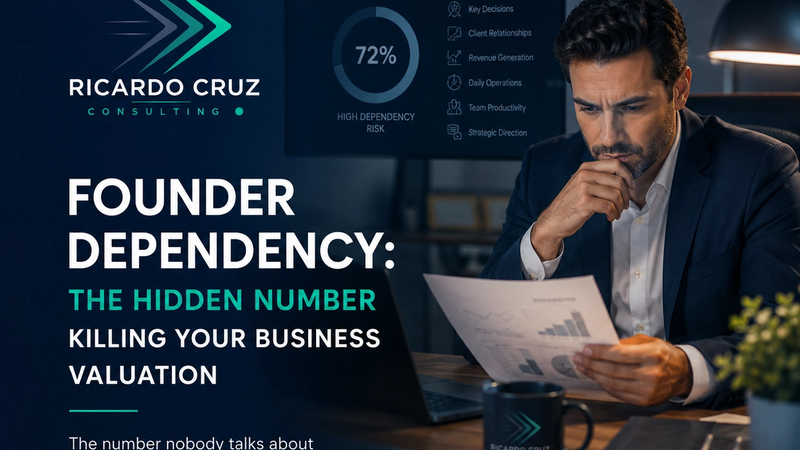
Founder Dependency: The Hidden Number Killing Your Business Valuation
Most founders track revenue and profit. Few track the metric that matters most when it comes to scaling, attracting investors, or eventually selling the business: founder dependency. When critical decisions, client relationships, approvals, and operational knowledge all flow through one person, growth slows, burnout rises, and business value declines. This article explores how founder dependency develops, why it damages both daily operations and long-term valuation, and the practical steps founders can take to build a business that runs without them at the center of every process.
Read article →
How to Scale Without Hiring More People
Scaling a small business does not always require more employees. Learn how operational efficiency, workflow design, and smarter systems can increase capacity before you add headcount.
Read article →
What a 90% Reduction in Escalations Actually Looks Like: A Teardown
See how a small business automated 90% of its manual escalation routing using AI-driven workflows. This real-world case study breaks down the diagnosis, implementation, and operational results behind a successful automation project.
Read article →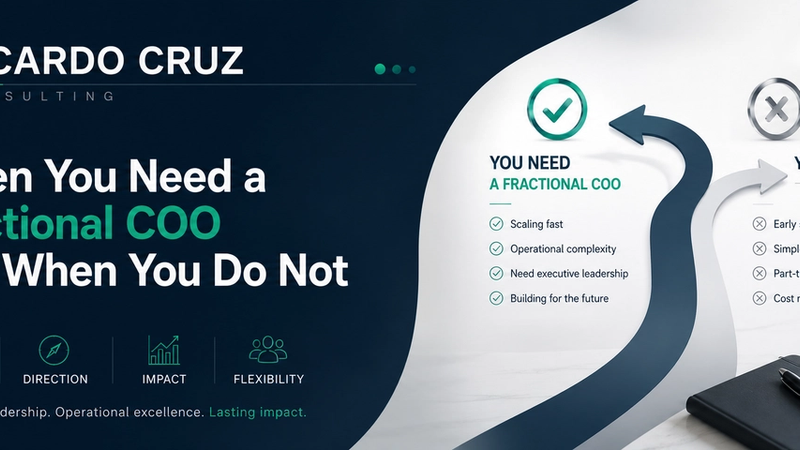
When You Need a Fractional COO and When You Do Not
A Fractional COO can help a growing founder-led business install the operating rhythms, decision frameworks, accountability, and systems needed to scale. Learn the signs the business is ready, and when a different form of support is more appropriate.
Read article →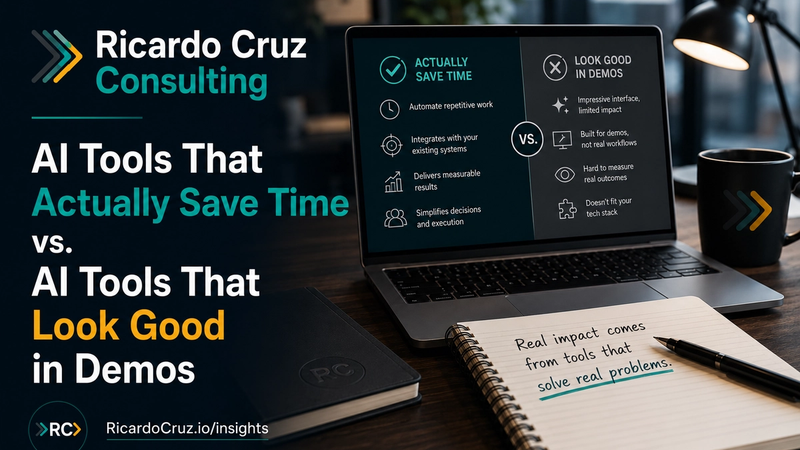
AI Tools That Actually Save Time vs. AI Tools That Look Good in Demos
Most AI tools fail because they solve the wrong problems. Learn how small business owners can identify AI tools that create real operational value instead of flashy software that only looks impressive in demos.
Read article →
Why Your Business Cannot Run Without You — And What to Do About It
Can't take a vacation without checking in? Learn the hidden costs of founder dependency and the systems that create operational freedom.
Read article →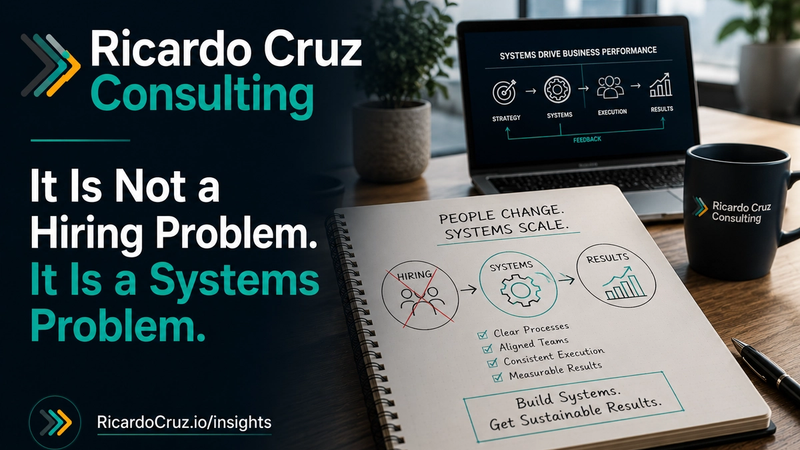
It Is Not a Hiring Problem. It Is a Systems Problem.
The most expensive thing a small business owner can do is hire someone to solve a problem that hiring will not fix. That statement makes people uncomfortable, because hiring feels like the responsible move. It feels like an investment. It feels like growth. And sometimes it is. But more often than most leaders want to admit, the decision to hire is actually a decision to delay. It is a way of adding capacity to a system that was never designed to use capacity well in the first place.
Read article →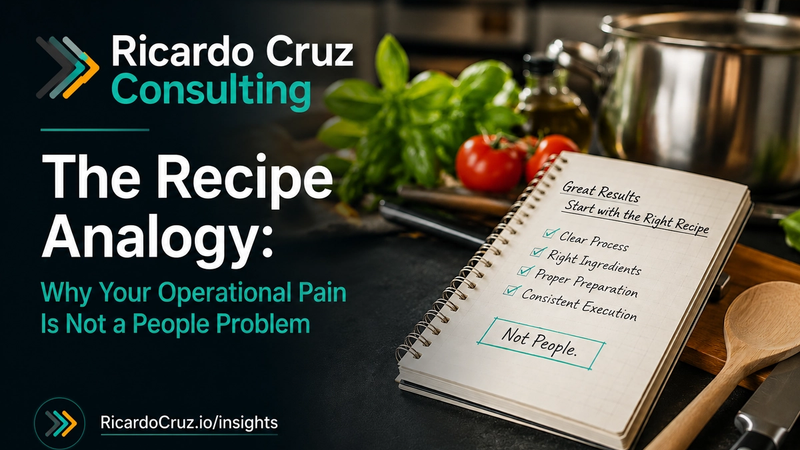
The Recipe Analogy: Why Your Operational Pain Is Not a People Problem
When operational issues pile up, most leaders look for who made the mistake. The better question is why the system made the mistake possible in the first place. This article explores how process design, not constant correction, creates scalable operations.
Read article →